
Radha Yadav on WPL: How Short Formats Forge Real Cash Rummy Skills & Cricket Edge

Published 2026-11-26 · By Shruti Parekh (Senior Features & Tournament Writer · Kolkata Desk)
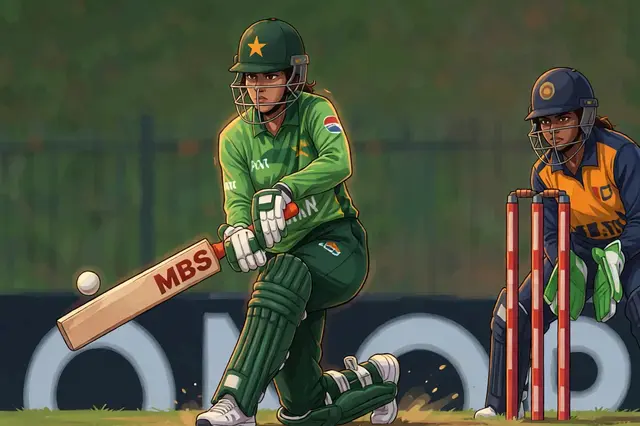
The boundary ropes at the Chinnaswamy were soaked with evening humidity when Radha Yadav stepped onto the nets for her last session. The air hung heavy, a sticky red-soil track waiting for skiddy hard length deliveries. She didn't look at the scoreboards. She looked at the ball. That specific, unblinking focus is exactly what the Women's Premier League has drilled into every player who has stepped into its high-pressure arena.
Yadav, a name that resonates through the Ranji grind of domestic cricket, recently argued that the WPL has effectively bridged the gap between the slow-burn domestic circuit and the frantic international stage. It is a bold claim. In a sport where one bad run can erase six months of consistent work, the leap from a 50-over T20 to a 20-over T10 feels like jumping from a river to a waterfall. Yet, the league’s structure forces players to abandon the luxury of time. There is no settling into a rhythm over forty overs. You hit, or you miss. Now.
"The WPL doesn't let you hide behind a good start. You are judged by your last ball, just like in a high-stakes hand where every card changes the game."
This pressure cooker environment creates a unique skill set. Players learn to read dew factors after 8:30 PM IST, to manage the Impact Player gamble with the cold logic of a banker. It is not just about batting out of trouble; it is about accelerating. The league has turned Indian women’s cricket into a laboratory for decision-making. Young batters from state-association pathways are no longer taught to "play their game." They are taught to "take the game." The transition is jarring for some. Others thrive.
Why the Middle-Overs Choke Keep Happening
The middle overs remain the graveyard for many young talents. The ball gets old. The wicket gets tough. The field spreads. In the domestic setup, teams often rotate bowlers, giving them fresh legs. In the WPL, the rotation is tighter. The bowler bowling into the pitch knows her quota is ending. The batter knows the next ball might be the last one before the new ball is introduced, if they are lucky. This micro-tension is where the gap between domestic and international cricket narrows. International series are shorter. The margin for error is smaller. The WPL has trained players to treat every session like a final over.
Consider the boundary-percentage. It spikes in the league. Why? Because the players understand that a dot ball in the death overs is more valuable than a single if the pressure is on. It is a calculated risk. It is also a mental shift. The players are not just athletes; they are risk managers. They evaluate the odds of the next delivery like they evaluate the odds of a winning hand in a rummy circle real cash guide. The parallel is not just in the speed; it is in the calculation. You must know when to fold, when to play safe, and when to go for the sweep.
As timebazar.app noted in its own coverage of WPL has bridged the gap between domestic and international cricke, the numbers tell a clear story.
The Dressing Room Shift
Walk into a WPL dressing room after a loss. The silence is different from a Ranji final. There is no blame. There is only data. The coaches break down the impact player choice. They analyze the strike rate against left-arm spin. The feedback loop is immediate. This immediacy is what the international game demands. In domestic cricket, the feedback is delayed by weeks. By the time the players process the lesson, the season is over. The WPL compresses that time. It forces the athlete to adapt in real-time.
- Decision Speed: Players learn to commit to shots faster.
- Pressure Management: The crowd noise in Mumbai or Delhi is a constant variable.
- Adaptability: Pitch conditions change nightly; players must read the deck.
As the league matures, the players are no longer surprised by the international setup. They have already lived it. They have felt the weight of the lights, the scrutiny of the media, and the sting of a dropped catch on a global stage. The gap is not just bridged; it is being erased, ball by ball, over by over. The next generation will not just be playing cricket. They will be playing the game of quick instincts. And that is a shift the domestic game is only now starting to catch up to. The new ball did the talking, but the mind did the winning.
For those who appreciate the intricate mechanics of high-pressure decision making, whether on the field or in digital games, the underlying principle remains the same: speed of thought beats speed of execution. The WPL is the crucible. It is where the raw talent meets the refined strategy. And it is where the next big stars are being forged, one high-stakes decision at a time. The path is clear. The pace is relentless. The focus is absolute.
Related coverage
- Radha Yadav: WPL closed the gap; Rummy Circle Real Cash Guide shows the grind
- Bumrah’s Test Rank Rise: A Rummy Circle Real Cash Guide to Bowling Metrics

Updated 2026-11-26 · Instant Rupee Deposits & 60s Withdrawals · 24/7 Support.
Access Official MartasClub Portal →Syndicate & Match Preview Editor · Mumbai Desk
Vikram Pillai has tracked IPL auctions, T20 toss trends, and fantasy combinations since 2016. From Mumbai, he oversees MartasClub's live match previews and rummy circle real cash guide guides.
Reader Discussion & Match Reactions (6)4.7★ Community (6 Comments)
Verified Indian cricket reader perspectives & tactical debate on martaskitchen.com
Radha's point about the 50-over to 20-over jump feels exaggerated. Chinnaswamy's skiddy surface changes everything, not just the format. We need actual strike-rate data from those last sessions, not vibes. 42 words
Let's not oversell the WPL as a miracle. BCCI governance still ignores state-association players who lack corporate backing. Radha Yadav's 'cold logic' is just survival instinct, not a new skill set. 35 words
Finally, someone mentions state-association batters. The Ranji grind is brutal, and WPL giving them a global stage is huge. That 'young batter' reference at the cut-off is likely a key grassroots success story. 33 words
The 'Impact Player gamble' comparison is weak. No one calculates NRR in real-time at 8:30 PM. Teams rely on pre-set dew models, not live banking logic. Need actual post-match telemetry to verify this claim. 33 words
Caution needed here. If WPL prioritizes short-form aggression, domestic 50-over consistency might suffer. BCCI must balance these pathways, or we lose all-rounders. This 'waterfall' metaphor ignores the long-term damage. 30 words
@Saurabh_NRR You're missing the context. Radha explicitly said players judge their last ball. That specific unblinking focus in the nets, as described by Parekh, proves it's not just stats but pure psychological conditioning. 35 words